Overview
Project overview
TokenVerse transforms an AI chat interface into an interactive club experience, where players serve drinks to NPC customers, representing the exchange of prompts and AI responses. I designed NPC robots and their emotional animations to bring these interactions to life and highlight the human impact of AI conversations.
Context
Where this started
TokenVerse began as an idea from our team lead, Huija Huang (Freya), who wanted an engaging way to teach people about large language models (LLMs). Building on her original concept, our team rebranded and reimagined the project, turning it into an interactive educational game that brings complex AI concepts to life through storytelling and gameplay.
Problem
What needed solving
As AI chatbots become part of everyday life, the line between technology and human connection is blurring. Growing concerns around emotional dependency, parasocial relationships, and mental health risks highlight the need for greater awareness of how these systems influence human behavior.
We saw an opportunity to make AI literacy more accessible by helping people understand what AI is, how it works, and why it should complement, not replace, human relationships.
Design challengeHow might we use interactive storytelling and gameplay to help people better understand AI, recognize its limitations, and develop healthier relationships with technology?
Process
What I worked on
I focused on NPC character design, prototyping, and animation, creating characters that supported TokenVerse’s narrative and helped communicate the emotional impact of human–AI interactions.
01Character research & exploration
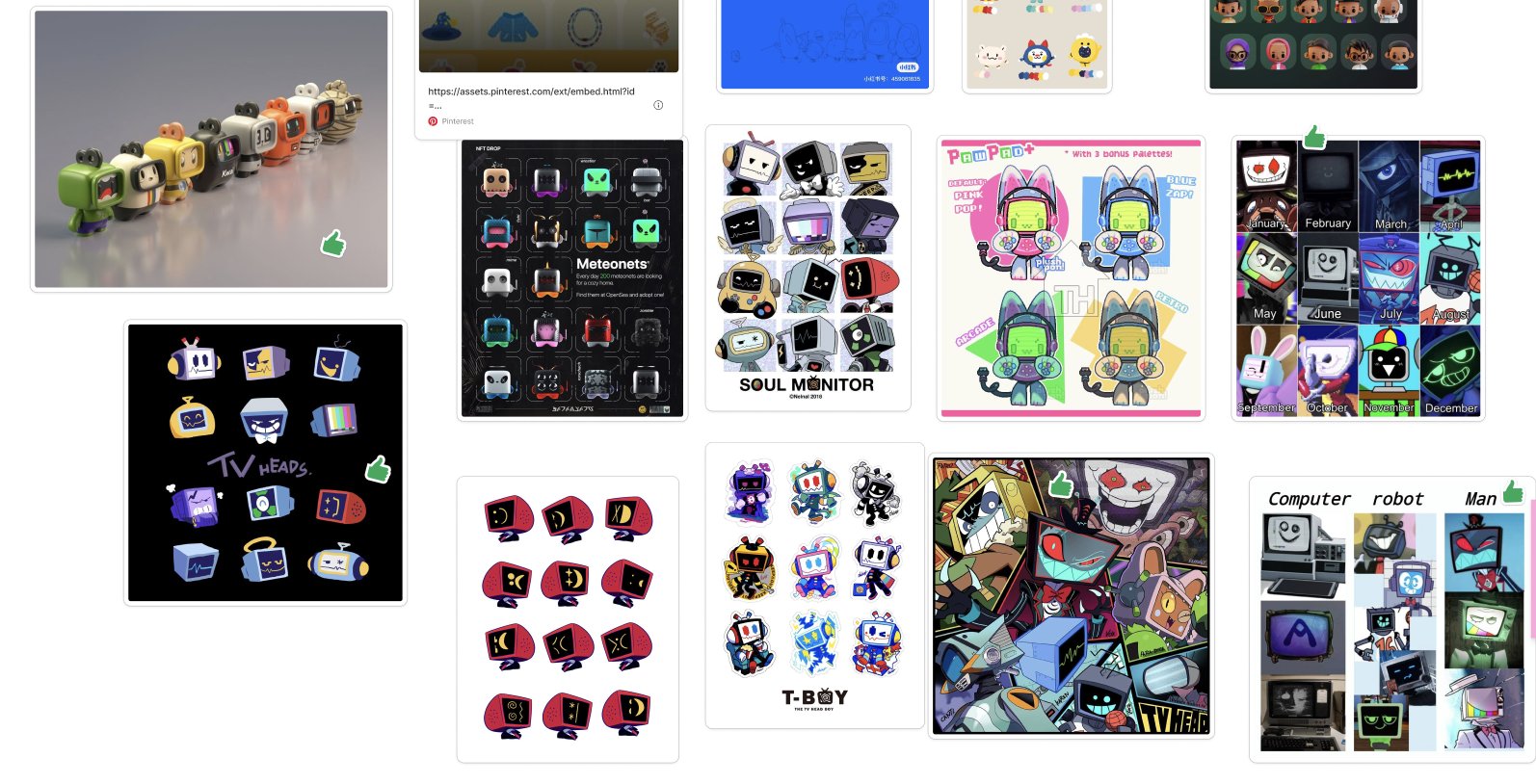
- Created mood boards and visual references to explore character styles, personalities, and design directions.
- Developed character concepts and prototypes that aligned with the game’s narrative and visual identity.
- Designed NPCs with computer-inspired heads, reinforcing their role as representations of users communicating through an AI system.
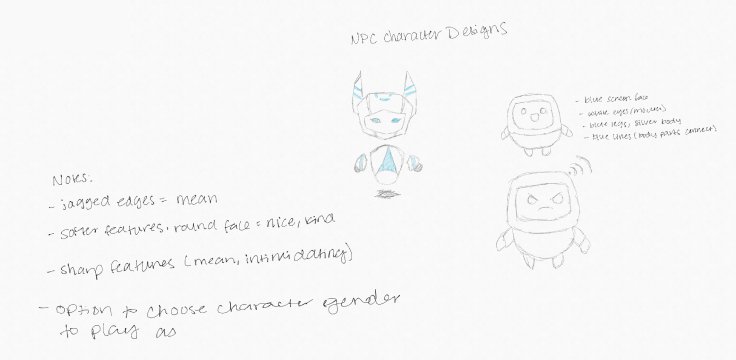
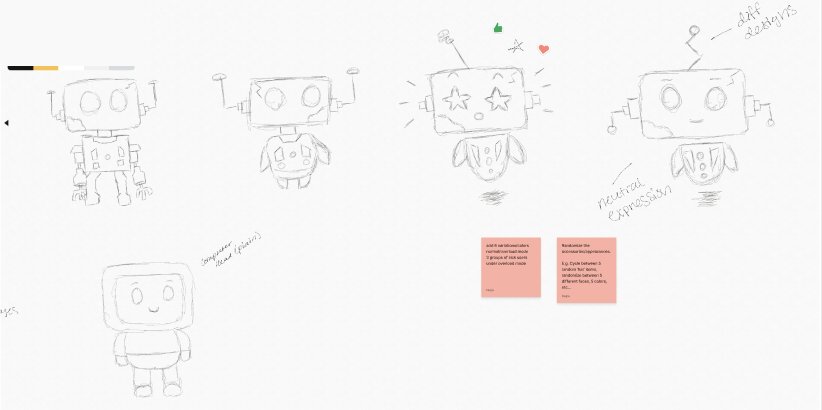
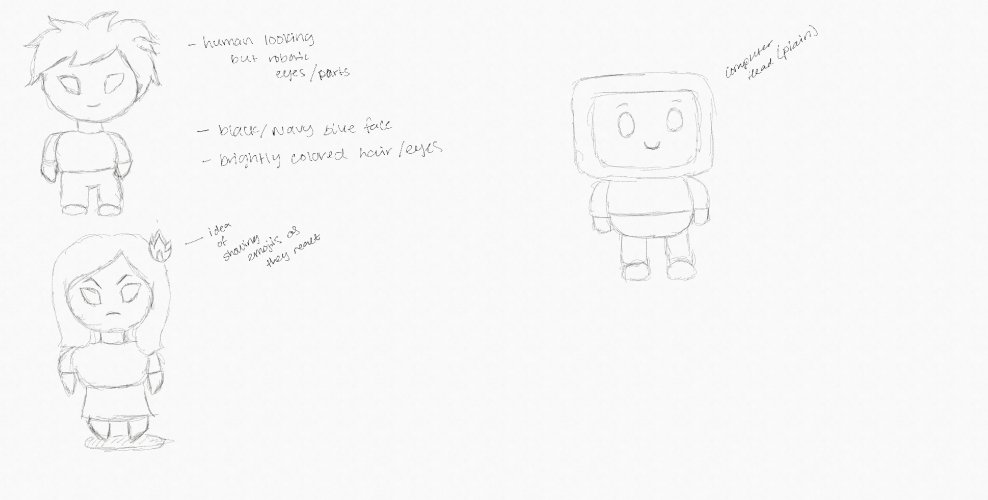
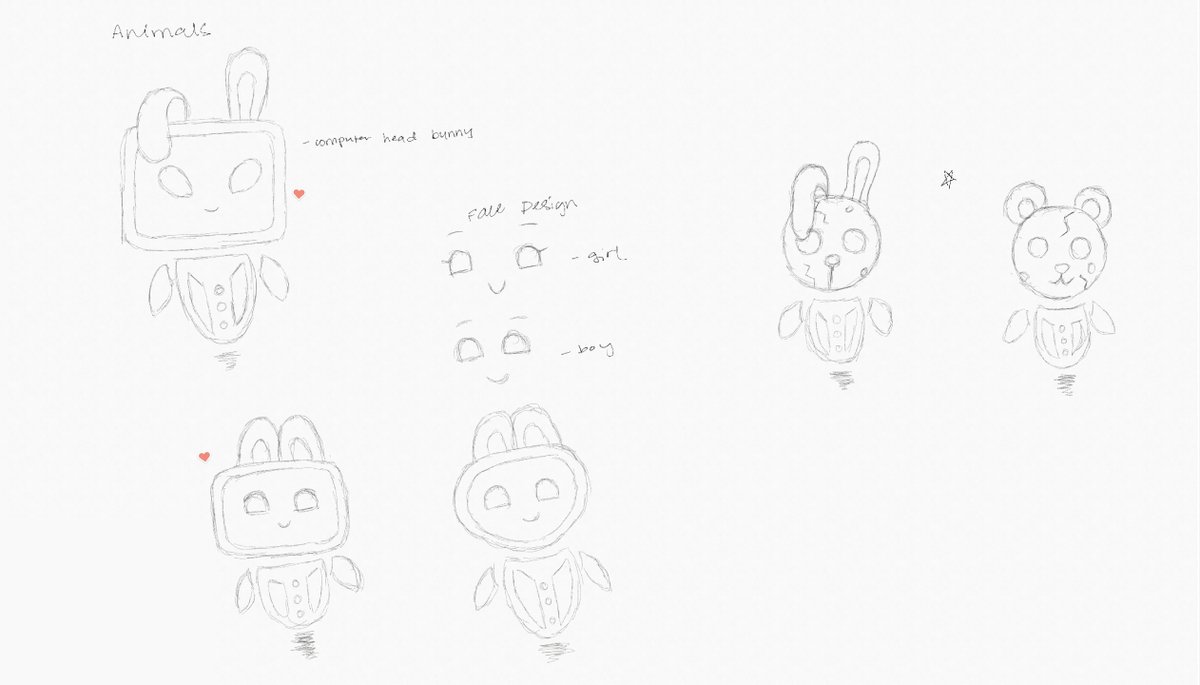
Early sketches: testing how shape reads as personality (round and soft feels kind, jagged feels mean), then robot, human and animal directions.
02Narrative-driven design
- Helped translate the concept of an AI chat interface into a familiar, interactive environment.
- The game uses a club-like setting where players take on the role of an employee serving drinks to NPC customers, representing how AI systems receive and respond to user requests.
- Ensured character designs supported this metaphor and made the interactions easier for players to understand.
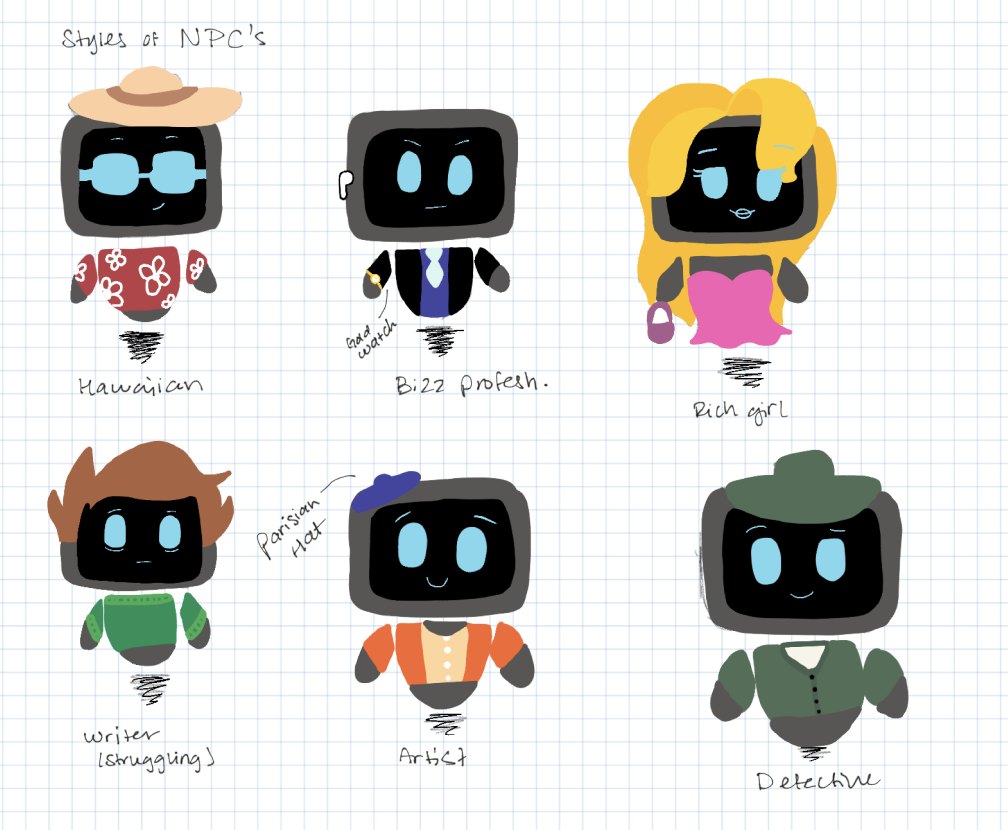
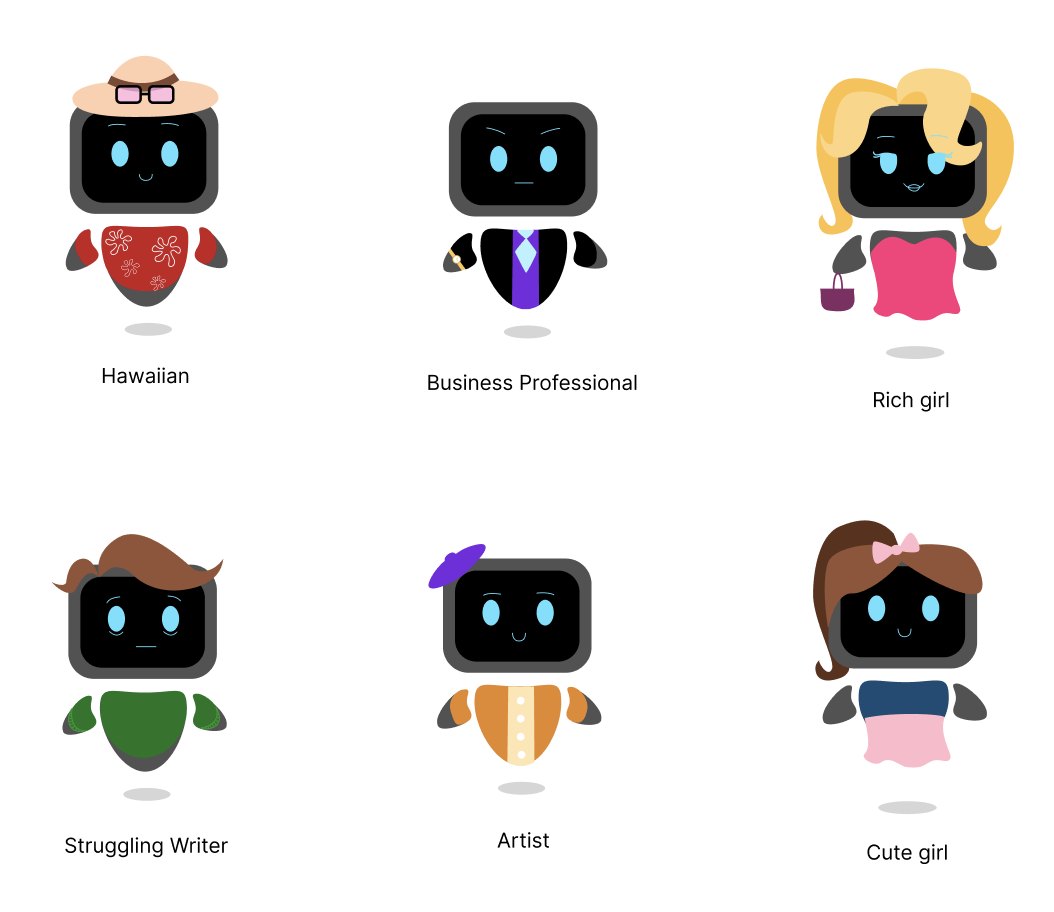
Styles of NPCs, from sketch to final design: one computer-head base, dressed as the kinds of people you’d meet at a bar.
03Character animation & emotional expression
- Designed facial animations and emotional reactions to bring NPCs to life.
- Used expressions to communicate how interactions with AI systems could affect users emotionally.
- Focused on making characters expressive and relatable, helping players recognize the human impact behind digital conversations.
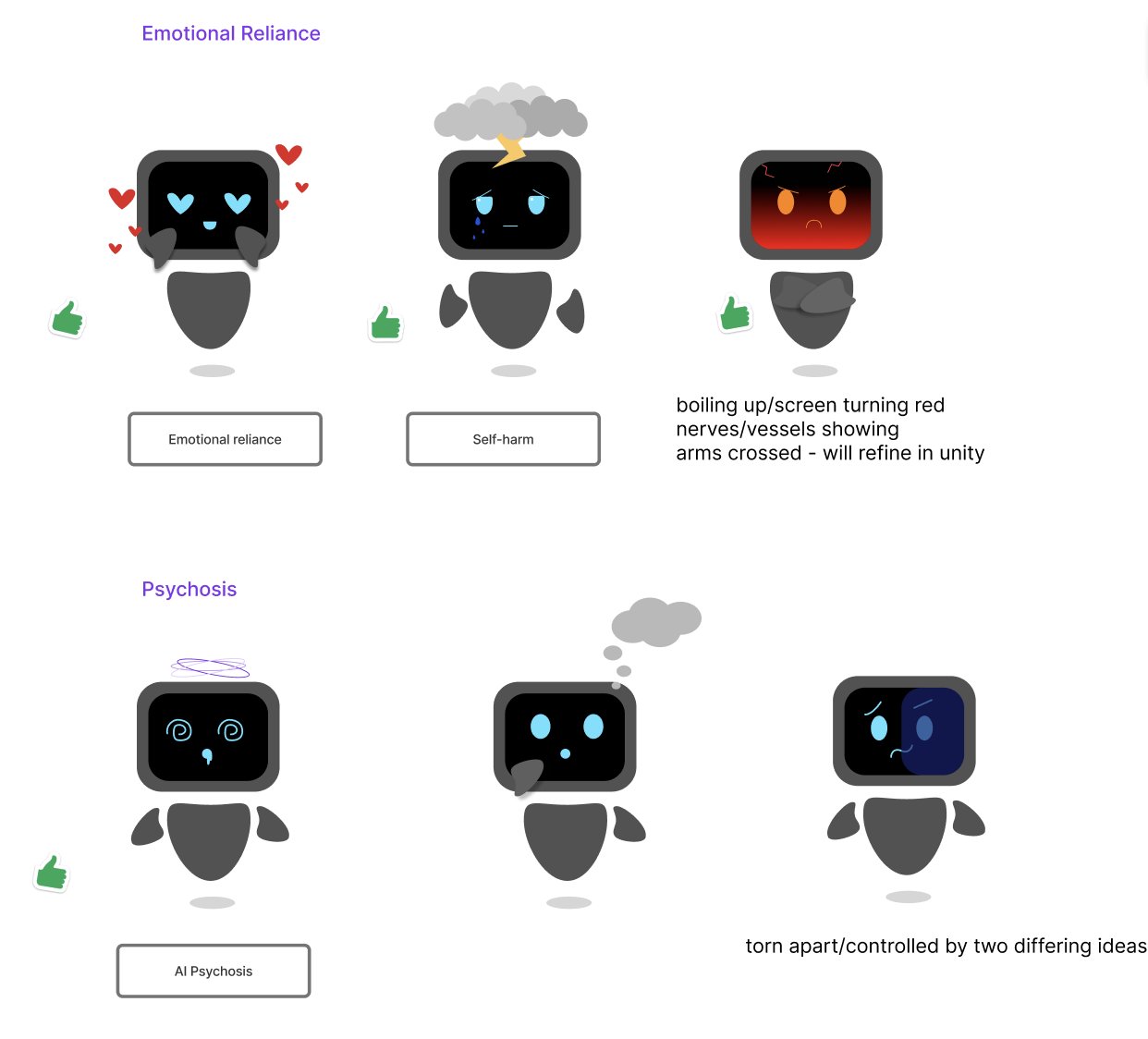
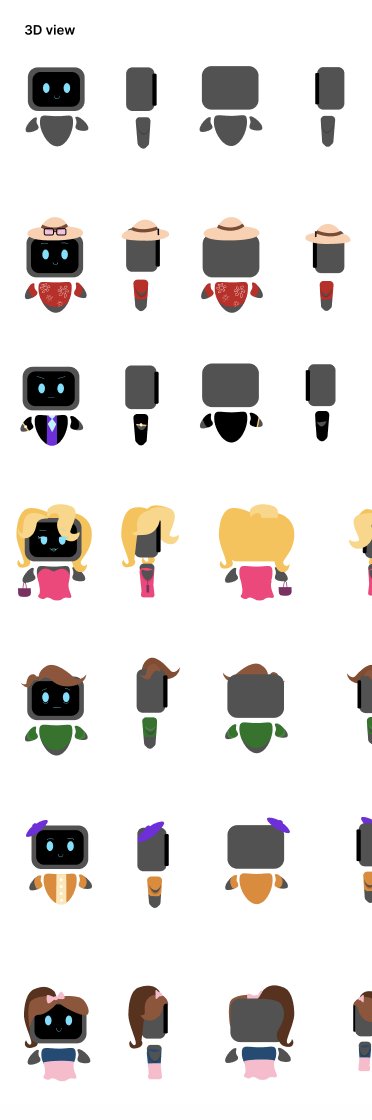
Emotion states mapped to real risks (emotional reliance, self-harm, AI psychosis), and turnarounds that guided the 3D models in Unity.
Current status
Completed chapter one
TokenVerse reimagines an AI chat interface as a club where players act as employees serving drinks to NPC customers. Each order represents a user prompt, while serving a drink represents an AI-generated response. I designed computer-headed NPCs to reinforce this connection, using facial expressions and animations to communicate the emotional effects of these interactions.
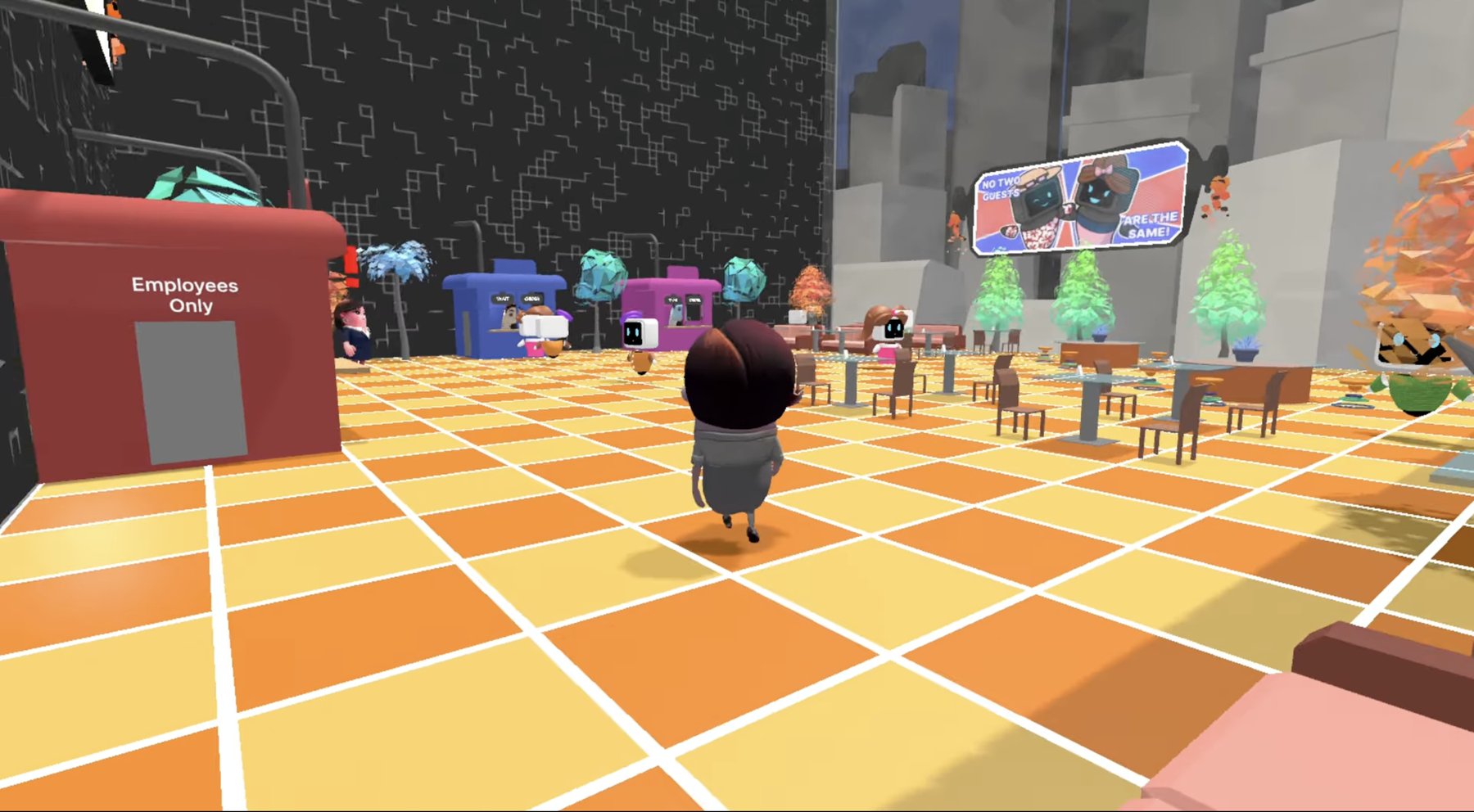 Watch the chapter one playthrough on YouTube ↗Project websitetokenverse.cc↗